LaTeX Parsing
parse_latex converts a LaTeX math string directly into a concrete model instance.
from econ_viz import parse_latex

model = parse_latex(r"x^{0.4} y^{0.6}")  # CobbDouglas(alpha=0.4, beta=0.6)
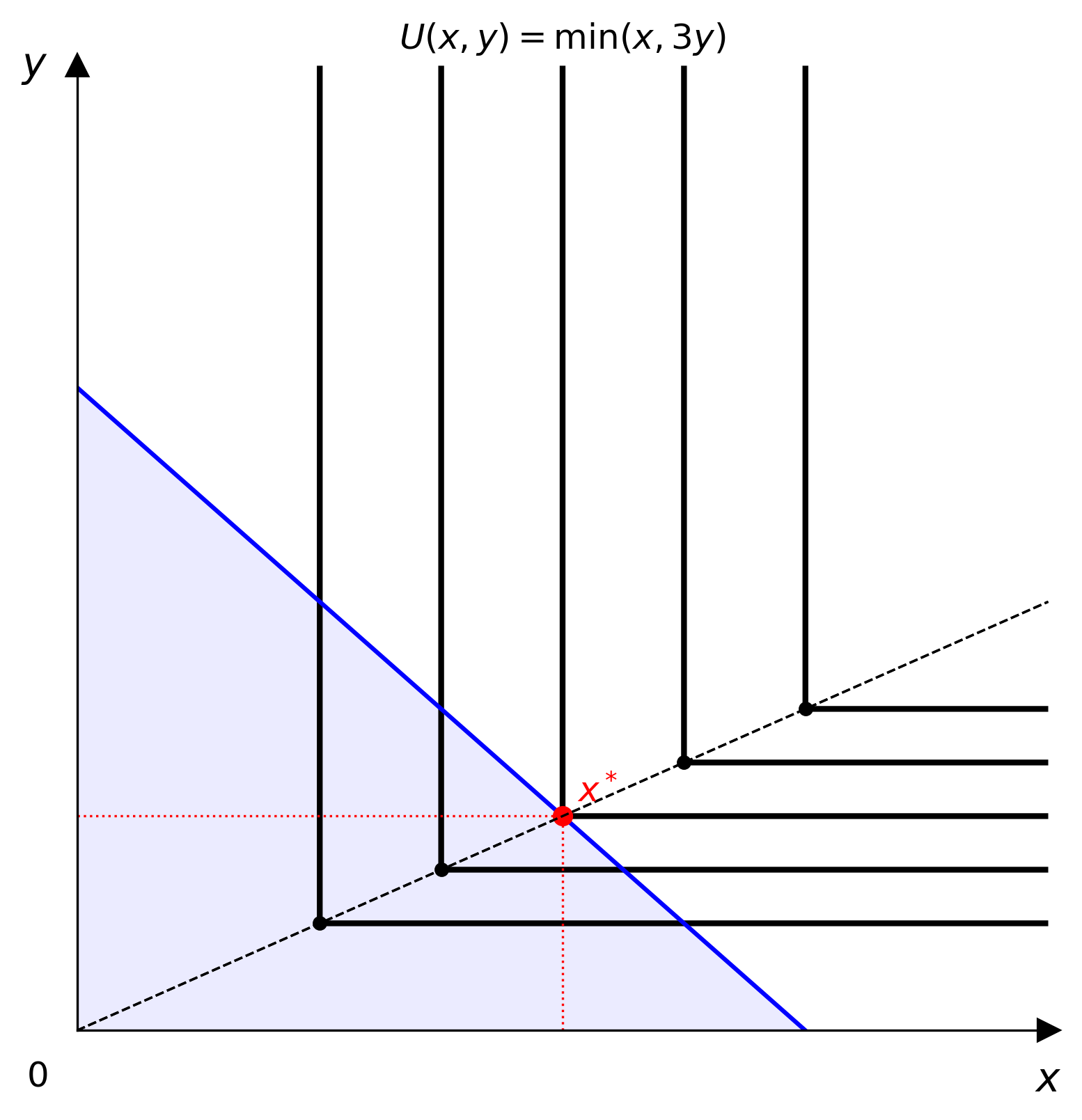
model = parse_latex(r"\min(2x, 3y)")     # Leontief(a=2.0, b=3.0)
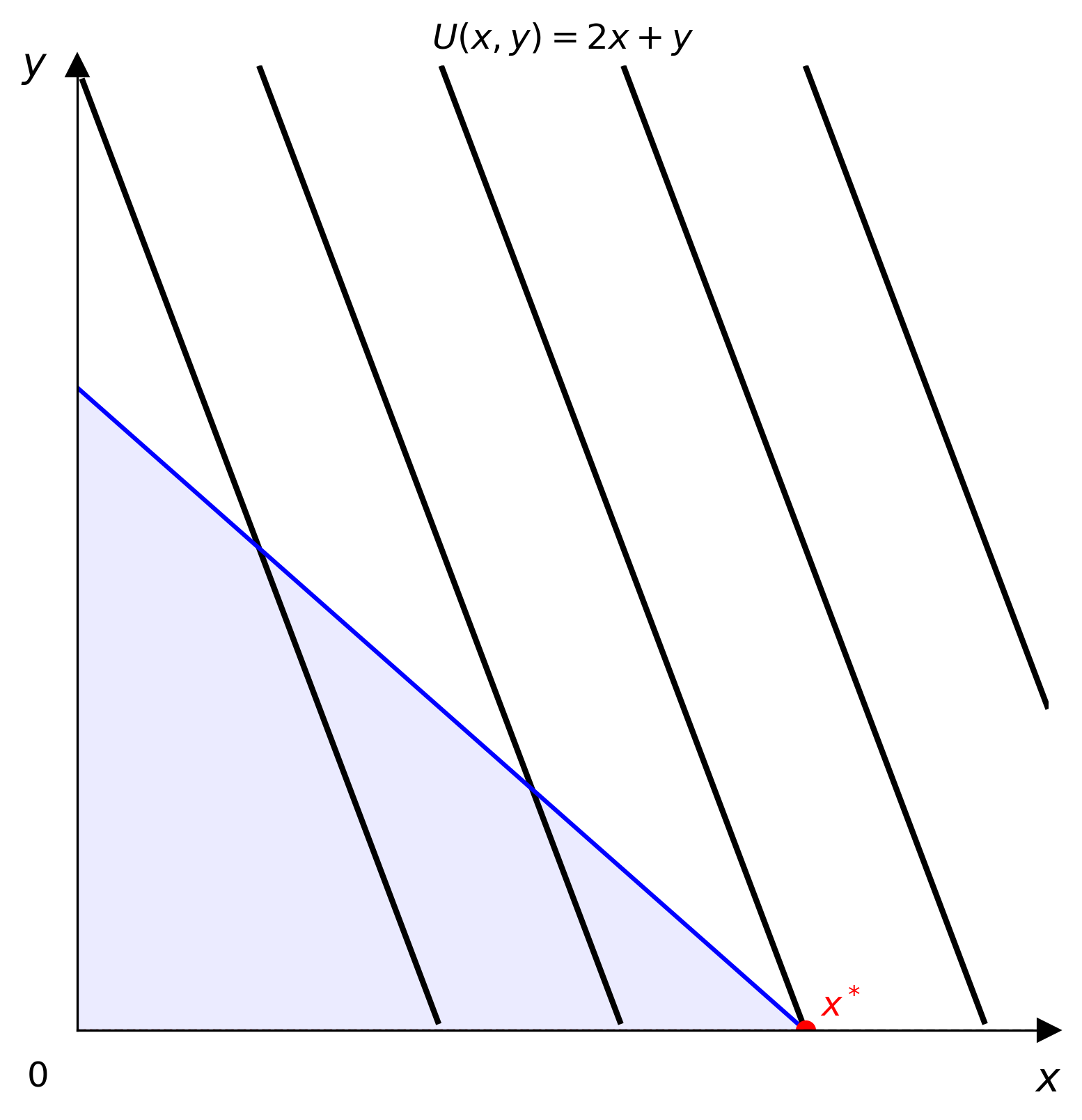
model = parse_latex(r"2x + 3y")          # PerfectSubstitutes(a=2.0, b=3.0)
Supported forms
| Family | Pattern | Example |
|---|---|---|
| Cobb-Douglas | x^{α} y^{β} or x^α y^β |
x^{0.3} y^{0.7} |
| Leontief | \min(ax, by) or min(ax, by) |
\min(2x, y) |
| Perfect Substitutes | ax + by |
3x + 1.5y |
Coefficients and exponents are optional and default to 1.
Input forms
Enter the utility expression alone, or prefix it with U = or U(x, y) =:
Errors
Unrecognised patterns raise econ_viz.exceptions.ParseError:
from econ_viz.exceptions import ParseError

try:
    model = parse_latex(r"x^2 + y^2")
except ParseError as e:
    print(e)

# Unrecognised LaTeX utility function: 'x^2 + y^2'
# Supported forms:
#   Cobb-Douglas       : x^{alpha} y^{beta}
#   Leontief           : \min(ax, by)
#   Perfect Substitutes: ax + by
#   CES                : (alpha x^{rho} + beta y^{rho})^{1/rho}
In the CLI